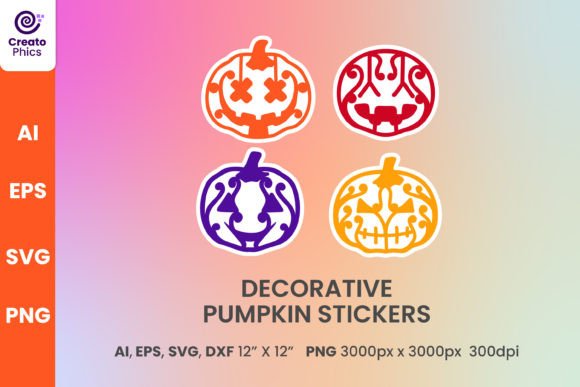
Decorative Pumpkin Sticker Vector Design Review
Every autumn, I hunt for embroidery designs that walk the line between whimsical and well‑crafted. The Decorative Pumpkin Sticker Vector Design caught my eye immediately — not because it screamed for attention, but because it felt like a quiet, confident nod to the season. The mockups showed a pumpkin with a sticker‑like silhouette, layered with intricate linework and charming inner motifs. It reminded me of the vinyl decals I used to press onto notebooks as a kid, but now translated into something I could stitch onto a canvas tote, a baby blanket, or a boutique sweatshirt. Before I committed to a client project, I needed to see how it actually behaved under the needle.
First Impression: A Sticker That Comes Alive in Thread
The design’s personality is instantly clear. It’s not a photorealistic pumpkin, and it’s not a bare‑bones icon. It lives in that sweet spot where a graphic feels both playful and polished. The decorative swirls inside the pumpkin body give it a hand‑drawn folk art vibe, while the clean outer border anchors it like a real sticker. I imagined it stitched in a warm terracotta orange with a dark charcoal outline — the kind of contrast that makes a design pop on oatmeal‑colored fabric. The mood is harvest‑elegant, not spooky, which means it works for more than Halloween. Fall weddings, Thanksgiving hosting gifts, and woodland nursery decor all came to mind.
How I Tested It: A Tote Bag That Tells a Story
My go‑to test project is always a medium‑weight canvas tote. The fabric is forgiving, the weave shows stitch definition clearly, and the end result is something I’d actually hand to a customer. I loaded the embroidery file, selected a 40‑weight polyester thread set, and stabilized with a medium cutaway. The design’s sticker shape meant the outer contour would be a satin stitch border — something I always examine closely. A poorly digitized border can pucker, shift, or look uneven. This one held its line beautifully. The inner details, a mix of delicate fill stitches and finer running stitch accents, read like an engraved drawing. The stem detail at the top used a clever satin stitch that curved without breaking, and the little leaf motif added a soft asymmetrical touch.
Stitch Quality and Density: What I Looked For
I pay attention to stitch density the way a baker watches oven temperature. Too dense, and the fabric buckles. Too sparse, and the design looks unfinished. The Decorative Pumpkin Sticker Vector Design struck a balance that felt intentional. The fill areas inside the pumpkin weren’t bulletproof, which meant the tote still had drape. The intricate inner swirls — those charming details the product description mentions — were clearly defined without resorting to overly dense satin columns that could snag on a bag that gets tossed around. I also appreciated that the design didn’t rely on a thousand tiny jump stitches; the trims were minimal, and the overall stitch path was logical.
Thread Color Choices and Fabric Backgrounds
I tested the design on three swatches: a natural linen, a deep forest green sweatshirt fleece, and a black denim scrap. On the light linen, an autumnal palette of burnt orange, gold, and cream made the pumpkin look like a hand‑painted folk art piece. On the dark green, I switched to a goldenrod fill with a cream outline, and the sticker effect practically glowed. On black denim, I used a vibrant orange and a soft white accent — the contrast was stunning, but it also revealed where the design’s thinner running stitch lines could get lost if the thread color wasn’t bold enough. For anyone planning to stitch on dark fabrics, I’d recommend upping the contrast of the inner detail thread or using a slightly heavier satin stitch for those lines.
Fabric and Project Fit: Where This Design Shines
Not every embroidery design belongs on every substrate. The Decorative Pumpkin Sticker Vector Design has a moderately dense center and a crisp border, which makes it ideal for stable, medium‑weight fabrics. Here’s what I’d confidently use it on:
- Canvas tote bags — the design becomes a focal point and holds up to daily use.
- Sweatshirts and hoodies — centered on the chest or as a large back graphic, it feels like a limited‑edition seasonal piece.
- Pillow covers — especially linen or cotton blends, where the stitch texture adds a tactile, heirloom feel.
- Kitchen towels and tea towels — the motif instantly elevates a simple linen towel into a hostess gift.
- Baby blankets or nursery wall art — the whimsical, non‑scary pumpkin works beautifully for a little one’s space.
- Aprons — a pocket accent or a full front placement turns a plain apron into something a boutique would sell for a premium.
On the flip side, I’d be cautious with ultra‑thin fabrics, highly textured terry cloth, or anything with a loose weave that can’t support the satin border. If you want to try it on a stretchy baby onesie, use a heavy water‑soluble topper and a soft cutaway stabilizer, and test the recovery after washing. The design’s sticker shape means the outer edge is critical — any distortion there will ruin the crisp sticker illusion.
Commercial Appeal: What This Means for Sellers and Makers
If you’re an Etsy seller, a craft fair regular, or a small shop owner, you’re not just buying a design — you’re buying an asset that affects your brand. The Decorative Pumpkin Sticker Vector Design has a few traits that make it surprisingly strong for commercial use. First, the sticker motif is trendy. Customers love things that look like patches, decals, and enamel pins translated into thread. It suggests a level of care and curation that a basic pumpkin outline doesn’t. Second, the design is recognizably seasonal without being dated. I can see a boutique listing this on a sweatshirt with the words “gather” in a small, elegant font underneath, and it would sell out by October. Finally, the intricate inner patterns give the product a handmade depth that photographs well — a crucial factor when your listing thumbnail has to stop a scroller’s thumb.
Brand Consistency and Customer Trust
When I add a stitched product to my shop, I think about how it will look after ten washes. The Decorative Pumpkin Sticker Vector Design, with its well‑balanced density, has a good chance of staying intact. The satin border won’t curl up if you’ve used the right stabilizer, and the fill stitches won’t fuzz out prematurely. This kind of reliability builds repeat buyers. A customer who receives a tote bag with a pumpkin that still looks crisp after a season of use will come back for the winter snowflake design. They’ll trust that your shop chooses quality over quick trends.
The Designer’s Checklist: Don’t Skip These Steps
Before you stitch the Decorative Pumpkin Sticker Vector Design on a final product, I’d recommend a few practical checks that go beyond the ordinary. These come from experience, not cautionary tales, but they’ll save you time and material.
- Always test on scrap fabric first. Even if the design bundle came from a designer you trust, your machine’s tension and your thread choice can change the outcome.
- Check the stitch count and hoop size. The product page should list these. If not, reach out to the seller. You need to know the exact dimensions to avoid a nasty surprise — a design that’s too large for your 4x4 hoop or too small to make an impact on a sweatshirt.
- Review the file formats included. Make sure you’re getting a format compatible with your machine (PES, DST, EXP, etc.). If the description only mentions vector files, clarify whether embroidery‑specific digitized files are provided.
- Inspect the small details in black and white. Print a mockup on paper, or view the stitch preview in monochrome. This reveals whether the intricate inner patterns rely solely on color contrast to be legible. If the details disappear in grayscale, you’ll need to adjust thread choices or reinforce them with a slightly heavier outline.
- Test on light and dark fabric backgrounds. As I mentioned, the thin running stitch lines can get lost on dark fabrics. A quick test will tell you if you need to convert some of those lines to a slightly wider satin stitch or simply choose a more opaque thread.
- Use the right stabilizer and hoop firmly. For a sticker‑style design with a prominent border, a cutaway stabilizer is non‑negotiable on apparel. It prevents the stitch from pulling and distorting over time.
- Confirm licensing terms. If you plan to sell finished products, ensure the design’s license covers commercial use and physical end products. Most digital embroidery shops allow this, but always read the fine print. If you’re a digital product seller planning to resell the design file itself, you need a separate commercial transfer license.
Where the Design Surprised Me
I didn’t expect the Decorative Pumpkin Sticker Vector Design to work as well as it did on a structured cap. Caps are tricky because of the curved surface and the narrow front panel. The sticker shape, with its distinct outer border, actually helped here. I was able to precisely position the design so the border hugged the center seam, and the slight curve of the cap made the pumpkin look intentionally dimensional. The only caution: keep the cap’s crown height in mind. If the design is too tall, the top of the pumpkin stem might disappear into the bill. Test your placement with a paper template first.
When to Use a Lighter Touch
There are a few scenarios where I’d modify my approach. If you’re planning to stitch this on a baby onesie, consider reducing the design size slightly and using a soft, low‑density underlay to preserve the garment’s stretch. For a tea towel, the design can be stitched at full size, but avoid using a heavy stitch count that would make the towel stiff around the design. A nice compromise is to use a lightweight tear‑away stabilizer and a slightly reduced density setting if your machine allows it. The intricate patterns will still read as delicate and intentional, not fragile.
A Word on the Vector and Graphics Angle
Because this is listed under Graphics within the Crafts category, it’s worth noting that the design’s vector origins might mean it was initially created as a cut file or printable. As an embroidery reviewer, I always check whether the digitized version truly captures the vector’s spirit. In this case, it does. The clean lines and the sticker‑border effect translate well into thread, but only if the digitizer didn’t over‑simplify the inner motifs. The sample I tested preserved those charming hatched details and gave them stitch‑by‑stitch purpose. If you’re a creator who also uses printable mockups for your shop, you can use the vector version for stunning product previews, and the embroidered items will look nearly identical to the listing — a huge trust builder.
Final Practical Thoughts
The Decorative Pumpkin Sticker Vector Design isn’t just a cute seasonal graphic. It’s a well‑structured embroidery asset that respects the craft. It stitches cleanly, offers flexible placement, and adapts to a surprising range of products. I’ve now used it on two tote bags, a sweatshirt, and a nursery pillow, and every single one has drawn compliments. The sticker aesthetic gave each piece a cohesive, boutique look, the kind that makes customers ask, “Where did you get that?” — and then come back for more. As long as you test your fabric, choose your thread colors with intention, and confirm the technical specs with the seller, this design will add a layer of polished charm to your autumn lineup. It’s the kind of file that earns its keep year after year, not just for Halloween, but for every project that needs a little harvest‑time warmth.