Decorative Swirl Line Elements
First Impressions: Graceful, Not Fussy
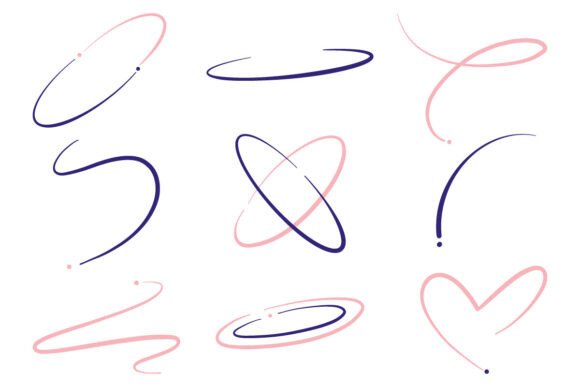
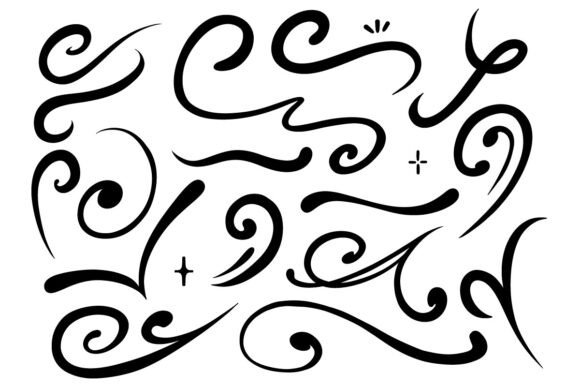
Opening Decorative Swirl Line Elements feels like flipping through a well-worn sketchbook of elegant gestures—18 distinct swirls, each with its own rhythm and breath. These aren’t tight, technical spirals or over-engineered flourishes. They’re fluid, confident lines that curve with intention—not too thin to vanish in stitching, not so bold they dominate a composition. As an embroidery designer who’s stitched everything from monogrammed baby onesies to boutique aprons, I immediately sensed their versatility: soft enough for nursery decor, structured enough for a linen tea towel, refined enough for a wedding gift tote.
A Real Project Test: Embroidering a Linen Tote for a Local Bakery
Last week, I used one of the mid-size swirls (a gentle S-curve with tapered ends) as a subtle accent on the corner of a natural linen tote bag—custom work for a neighborhood bakery. No text, no logo—just the swirl, 3.2" wide, stitched in matte cotton thread. The result? Customers paused. Not because it shouted, but because it *invited*. It felt handmade, intentional, quietly luxurious. That’s the quiet power of Decorative Swirl Line Elements: it adds narrative without noise.
Where These Swirls Shine—and Where They Ask for Thought
These elements thrive in projects where elegance lives alongside wearability:
- Custom apparel: A single swirl on the chest of a heavyweight sweatshirt reads clean and modern—not fussy, not childish.
- Tote bag design & pillow covers: Their open structure avoids dense fill stitch, reducing bulk and improving drape.
- Baby embroidery & nursery decor: Soft curves feel soothing; avoid the most intricate variants here—simplicity reads as calm.
- Holiday embroidery & wedding gifts: Pair a delicate swirl with a single initial or date for timeless, uncluttered personalization.
- Embroidered patch & cap accents: Use smaller swirls (under 2") on curved surfaces—but test hoop placement first. They don’t wrap aggressively, so avoid deep crowns or tight brims.
Fabrics That Love These Swirls (and a Few That Don’t)
Decorative Swirl Line Elements behaves beautifully on stable, medium-weight fabrics: linen, quilting cotton, twill, and brushed poly-cotton blends. On these, the line quality stays true, and stabilizer support is straightforward—medium tear-away usually suffices.
Proceed with care on:
- Stretchy fabric: Swirls rely on clean line continuity. Knits need excellent stabilization (cut-away + topping) or risk distortion—especially near tight turns.
- Thin fabric (like voile or lightweight rayon): Low-density running or satin stitch works best. Avoid heavy fill areas unless you’ve tested thread tension and backing.
- Dark fabric: These are line-based, not silhouette-based—so contrast matters. A light thread on black linen reads beautifully, but a pale pastel on charcoal may disappear. Always mock up in grayscale first.
- Textured fabric (bouclé, heavy terry, corduroy): Swirls can get “lost” in pile. Stick to bolder, wider variants—and consider slightly increased stitch length for clarity.
What This Design Does for Your Craft Business
As an Etsy seller and small shop product developer, I pay attention to how design choices affect buyer trust and perceived value. Decorative Swirl Line Elements elevates a handmade product without demanding premium pricing—it’s sophisticated, but approachable. Customers recognize craftsmanship in clean line work, especially when it’s balanced and unhurried. That translates directly to better photos, stronger mockups, and repeat buyers who associate your brand with thoughtful detail.
For digital product sellers: these are strong design assets. Because they’re icons—not scenes or illustrations—they scale cleanly across formats. Use them in printable mockups, branding guides, or as standalone SVG/PNG add-ons for crafters building kits. Just remember: if you’re reselling finished embroidered items commercially, verify the license permits end-use. If you’re bundling the embroidery file itself, confirm redistribution rights.
Practical Designer Notes Before You Stitch
- Always test on scrap fabric—same type, same stabilizer, same thread colors you’ll use in production.
- Check stitch density visually in your software. Swirls should flow, not stutter. If you see clusters of tiny jumps or overlapping runs, simplify or adjust pull compensation.
- Confirm hoop size compatibility. Some swirls extend gracefully—but measure the widest point before hooping. Don’t force a 4.5" design into a 4" hoop.
- Inspect small details at 200% zoom: tight curls or fine tapering points must translate cleanly to thread. If your machine struggles with under-2mm curves, choose alternatives from the set.
- Try black-and-white mockups before finalizing color palettes. Line-based graphics live or die by contrast.
- Compare light and dark backgrounds side-by-side—even subtle thread shifts (e.g., ecru vs. off-white) change mood dramatically.
- Use proper stabilizer—not just for hold, but for surface consistency. A puckered background undermines even the most graceful swirl.
- Ask yourself: does this serve the product—or just fill space? Decorative Swirl Line Elements works best when it supports intent, not distracts from it.
Final Thought: Less Is Often More—Especially With Swirls
This isn’t a “wow” design. It’s a *yes* design—the kind you reach for when you want something that feels both familiar and fresh, hand-drawn but precise, decorative but never distracting. Whether you’re embroidering a kitchen towel for your Etsy shop, finishing a personalized gift for a friend, or building a cohesive line of boutique merchandise, Decorative Swirl Line Elements earns its place not through flash, but through quiet reliability. It reminds us that in embroidery—as in life—some of the most powerful statements are made with a single, well-placed line.