Ethnic Decorative Elements: Hand-Drawn Graphics & Patterns
First Impression: Warm, Whimsical, and Genuinely Handmade
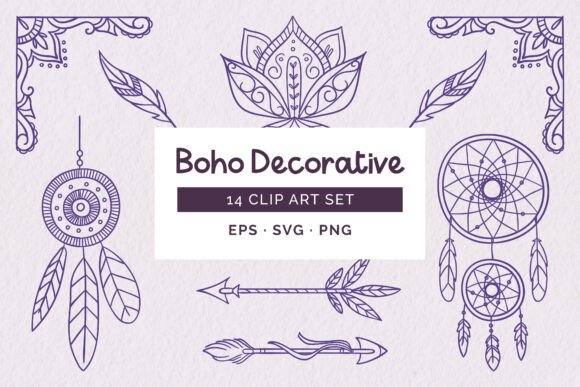
When I opened Ethnic Decorative Elements, my first thought wasn’t “pretty clipart”—it was “this feels like a sketchbook page from a thoughtful local artisan.” The Cute hand-drawn ethnic decorative elements, with small mandalas, dream catchers and floral designs, carry an unmistakable human touch. There’s slight line variation, gentle imperfection in the curves, and a quiet confidence in the doodle style—no sterile symmetry, no over-polished vectors. It reads as friendly, grounded, and intentionally organic. For a real local business—say, a handmade soap studio in Asheville or a family-run Mexican pastry shop in San Antonio—this asset signals authenticity before a single word is read. It leans feminine and earthy but avoids cliché; it’s festive without being loud, decorative without feeling cluttered.
Where It Shines in Real Small Business Branding
I recently used Ethnic Decorative Elements for a seasonal candle brand launching a “Desert Bloom” collection—think native florals, sandstone tones, and hand-poured soy wax in reusable ceramic vessels. Here’s where it delivered tangible value:
- Product labels: A single mandala placed subtly beneath the product name added rhythm and cultural resonance without overwhelming the clean typography.
- Packaging accents: Wrapped around the base of kraft paper boxes and stamped onto linen drawstring bags, the dream catcher motif became a quiet signature—recognizable at a glance on crowded boutique shelves.
- Social media graphics: Layered behind minimalist quote text on Instagram posts, the floral doodles created soft visual hierarchy while reinforcing the brand’s handmade, botanical ethos.
- Thank-you cards & hang tags: Printed in warm terracotta ink on recycled cotton stock, the elements felt personal—not mass-produced—but still cohesive across every customer touchpoint.
- Seasonal campaign visuals: For a spring pop-up market, we scaled up one floral cluster as a hero graphic on a fabric banner—soft, inviting, and instantly aligned with the vendor’s local, craft-forward identity.
Why Local Businesses Gain Trust—and Shelf Appeal—with This Asset
In a world saturated with AI-generated “vintage” filters and generic design assets, Ethnic Decorative Elements offers something rare: consistency rooted in character. When applied thoughtfully, it strengthens first impressions by signaling care and intentionality. Customers subconsciously register that your packaging isn’t just functional—it’s curated. That translates directly to better product recognition (especially in markets where 70% of purchase decisions happen at shelf), clearer visual hierarchy (the doodle elements guide the eye *around* key info, not over it), and more consistent brand identity across digital and physical spaces. For food businesses adding labels to mason jars or boutique owners designing custom gift wrap, that cohesion builds trust faster than any tagline.
Best Use Cases: Where These Graphics Earn Their Keep
This isn’t filler decoration—it’s strategic visual language. It works hardest in:
- Product mockups for Etsy or local craft fairs
- Hero graphics for website banners and email headers
- Decorative borders on printable inserts (e.g., tea blend instructions or skincare usage guides)
- Boutique visuals—window decals, receipt tape, loyalty card stamps
- Social media campaign graphics tied to cultural celebrations or seasonal themes
- Accents on hang tags, sticker seals, and thank-you cards for handmade businesses
Use With Intention—Not Everywhere
Like any strong graphic design asset, Ethnic Decorative Elements loses impact when misapplied. Avoid using it in:
- Formal corporate branding (law firms, financial advisors)
- Very small product labels where fine details vanish at scale
- Crowded packaging layouts already dense with text, icons, or regulatory copy
- Ingredient-heavy food labels—mandalas shouldn’t compete with allergen statements
- Backgrounds with low contrast (e.g., light grey on off-white), which mute the delicate line work
- Luxury minimalist brands where whitespace and restraint are core values
Practical Brand Designer Notes You Can’t Skip
Before locking in Ethnic Decorative Elements for client work or your own small business branding, do these six things:
- Test it on a real product mockup—not just screen preview. Does the mandala hold clarity on a 2-inch soap label? Does the dream catcher scale gracefully on a 12x18 poster?
- Check black-and-white output. Some doodle-style lines disappear when converted to grayscale or printed on thermal receipt paper.
- Preview it beside your actual brand colors. Does the hand-drawn warmth clash with cool-toned palettes—or harmonize beautifully?
- Compare it against top competitor packaging. Is it distinct enough to stand out in your local market?
- Inspect the EPS file: Are individual elements grouped logically? Can you isolate and recolor one floral element without affecting others? (Critical for flexible packaging design.)
- Confirm commercial licensing—especially if selling physical products. Not all creative marketplace assets cover resale on merchandise or food labels.
Final Thought: A Tool for Human-Centered Branding
Ethnic Decorative Elements isn’t about trend-chasing. It’s about giving local business owners—bakers, candle makers, herbalists, florists, and handmade sellers—a way to embed warmth, heritage, and craft into their visual voice. Used with purpose, it transforms packaging from container to conversation, turns a social post into a moment of connection, and helps customers feel they’re choosing something made *with* care—not just *for* sale. In small business branding, that difference isn’t subtle. It’s everything.